By Daniel Mercer
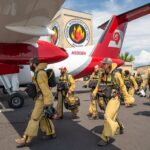
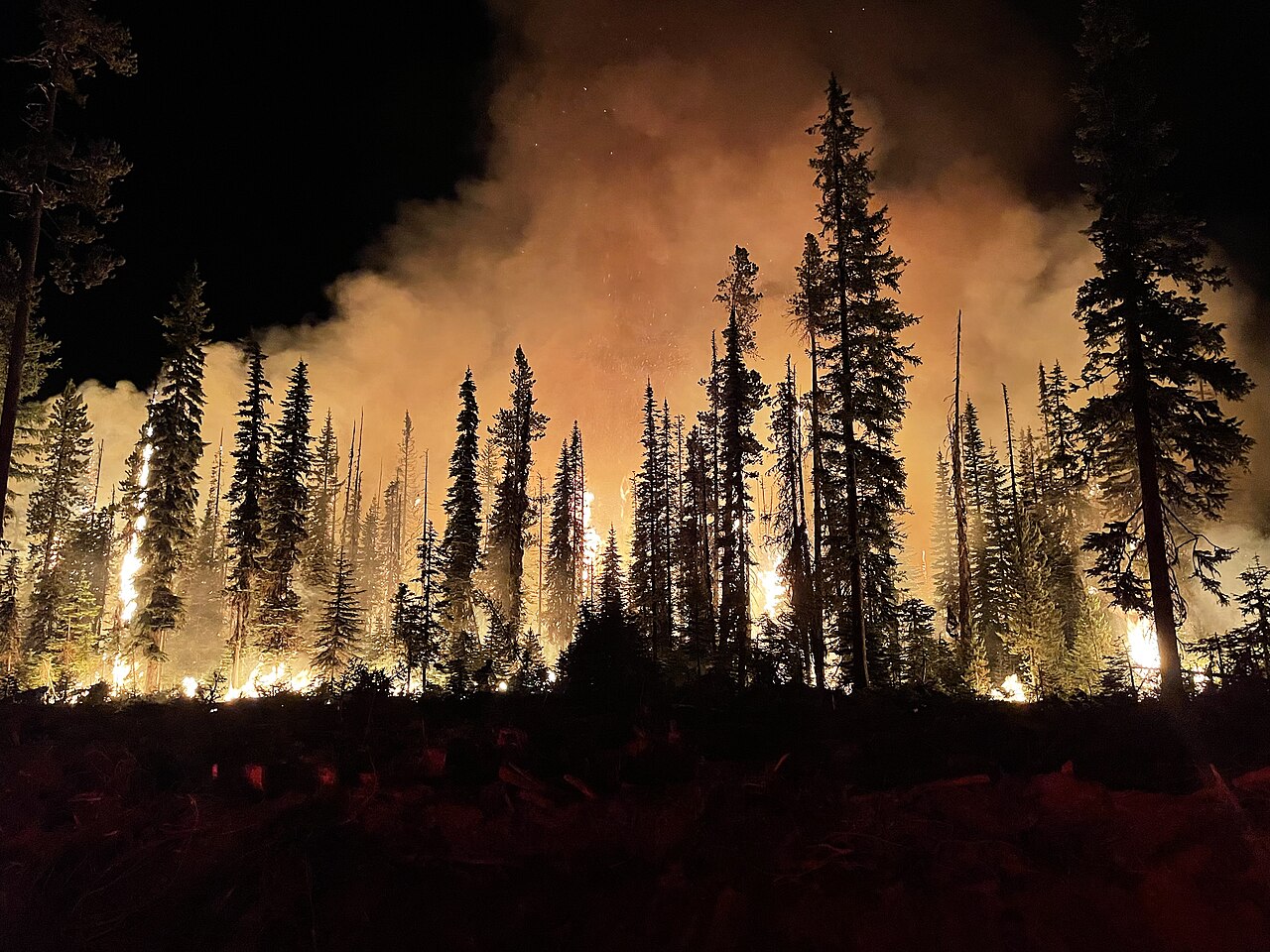
When a wildfire ignites deep in remote wilderness, far from roads and fire engines, there is often only one way to respond quickly: from the sky. That is where smokejumpers come in — elite wildland firefighters who parachute directly into rugged terrain to battle fires in their earliest and most dangerous stages.
For nearly a century, smokejumpers have represented one of the most daring and disciplined branches of wildfire response. Their work combines aviation, endurance athletics, technical firefighting, and a mindset built on calm decision-making under pressure.
What Is Smokejumping?
Smokejumping is a rapid-response wildfire suppression strategy used primarily in remote, inaccessible areas. Specially trained firefighters parachute from fixed-wing aircraft into wilderness locations where fires have just started. Their objective is simple but critical: contain and extinguish the fire before it grows beyond control.
Once on the ground, smokejumpers often hike long distances carrying heavy packs filled with tools, food, water, medical gear, and communications equipment. In many cases, they must operate independently for several days before additional support arrives.

A Brief History
The concept of smokejumping emerged in the late 1930s as aviation technology advanced and wildfire detection improved. Early experiments demonstrated that parachuting firefighters directly into remote fires dramatically reduced response times.
The first operational jumps took place in 1940, and the program quickly expanded. Over the decades, smokejumpers have played pivotal roles in protecting forests, communities, and critical infrastructure across North America and other fire-prone regions.
While equipment and aircraft have evolved, the core mission has remained unchanged: rapid containment in difficult terrain.
The Training: Mental and Physical Demands
Becoming a smokejumper is not easy. Candidates must already be experienced wildland firefighters before they are considered. From there, the selection process is rigorous:
• Intensive physical fitness standards
• Advanced parachute training
• Fire behavior analysis
• Survival skills
• Remote medical training
Fitness alone is not enough. Smokejumpers must also possess strong judgment, teamwork skills, and the ability to make critical decisions under extreme conditions.
Their training emphasizes:
• Precision parachuting into small clearings
• Tree landings and obstacle avoidance
• Tool deployment and immediate fire line construction
• Self-sufficiency in isolated environments
Life on the Fireline
A typical smokejumping mission begins with reconnaissance. Once dispatched, jumpers board aircraft equipped with specialized cargo compartments for both firefighters and supply bundles.
After parachuting in, they:
1. Assess fire behavior and terrain
2. Establish safety zones and escape routes
3. Begin cutting fireline using hand tools
4. Coordinate aerial support if available
Because smokejumpers are often the first responders, their early tactical decisions can determine whether a small ignition becomes a catastrophic wildfire.
Operations are physically exhausting. Jumpers carry loads that can exceed 100 pounds when combining personal gear and supply drops. They work long hours in high heat, smoke-filled air, and unpredictable weather.
Why Smokejumpers Still Matter
Modern wildfire suppression includes helicopters, air tankers, drones, and satellite detection. Yet smokejumpers remain uniquely valuable.
Their advantages include:
• Speed of deployment
• Access to terrain unreachable by vehicles
• Independence from large logistical support
• Immediate on-the-ground decision-making
In an era of longer fire seasons and climate-driven fire intensity, early containment is more important than ever. Stopping a fire when it is less than one acre in size is exponentially easier than fighting it once it grows into thousands.
Smokejumpers are often that first and only line of defense.
Technology Meets Tradition
While the image of smokejumpers may feel timeless, the profession continues to evolve.
Modern advancements include:
• Lightweight fire-resistant fabrics
• GPS navigation systems
• Improved communication tools
• Advanced weather modeling
• Enhanced parachute systems
Despite these innovations, the heart of the mission remains human grit, teamwork, and judgment.
The Human Side of the Story
Beyond the physical and technical demands, smokejumpers share a deep sense of camaraderie. Living and working in high-risk environments builds bonds forged under pressure.
Many describe the work as a calling rather than a job — a commitment to protecting forests, wildlife, and communities that cannot protect themselves.
It is a profession that demands humility. Fire is unpredictable. Terrain is unforgiving. Conditions change rapidly. Respect for the environment is as critical as physical courage.
Looking Forward
As wildfire seasons expand across the globe, the need for rapid-response suppression strategies will only grow. Some regions are now studying smokejumping as part of broader wildfire modernization efforts.
At the same time, innovation in aerial firefighting — including modular systems, data analytics, and robotics — may complement but not replace the human element that smokejumpers represent.
In the end, smokejumpers embody something fundamental about emergency response: when the fire is remote, when the terrain is brutal, and when time is critical, there are still people willing to step out of an aircraft into smoke-filled skies — not for spectacle, but for service.
And that may be their greatest legacy.